
Financial literacy needs a more comprehensive definition
What is financial literacy? Most people think of it as a roadmap to staying out of excessive debt and building wealth. It includes everything from cash flow awareness and budgeting to understanding how compound interest and investment vehicles work.
But what if you have lost a job, faced a serious illness, or if managing debt during a period of high inflation has simply become too difficult? What should you do when debt becomes unmanageable? Awareness of debt relief programs and other options — and what path may be right for you and your family — is an important part of financial literacy as well.
What is debt relief?
We like to think of debt relief as an important chapter in the book on financial literacy. Consumers always should try to avoid excessive debt, but life happens. Sometimes even the most-prepared people are forced into significant debt.
When debt becomes unmanageable, debt relief can be an effective option. It provides consumers facing severe financial hardship with a structured path to reduce and resolve unsecured debt, which includes credit card debt, medical debt, and debt from personal loans. With debt relief, the consumer is always in charge. If they are not happy with the service, they can walk away at any time with no penalty. The Federal Trade Commission (FTC) oversees the debt relief industry, so does the Consumer Financial Protection Bureau (CFPB), and state regulators also provide oversight.
ACDR members go even further than these government rules require. To earn ACDR accreditation, debt relief providers must submit to an annual independent audit that affirms the provider:
Delivers disclosures in multiple ways — verbally and in writing — to ensure a consumer’s understanding of the program prior to signing a contract;
Conducts a decisive budget assessment with every consumer to determine that person’s potential for fit and success in a debt relief program;
Applies robust quality assurance and quality control reviews to marketing and advertising content and ensures vendors doing business on the company’s behalf are also held to the ACDR standards; and
Ensures any third-party product or service offered at enrollment improves the client experience or improves the settlement outcome.
What are a consumer’s options when debt becomes unmanageable?
When consumers go into debt, they have several options based on where they live. Debt relief, sometimes referred to as debt settlement, is not available in every state — though ACDR is actively working to expand access to it. In states where debt relief is not allowed, consumers can make minimum payments, engage in debt consolidation or refinancing, or take out installment loans.
These options often are more costly than debt settlement, however.
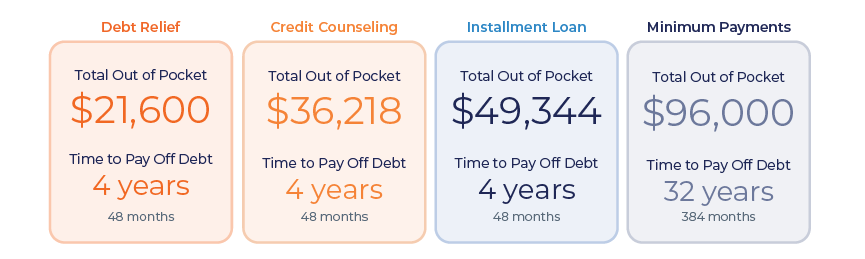
Debt relief is the only alternative to bankruptcy that allows consumers to pay less than the principal balance owed. A debt relief consumer who holds $30,000 in unsecured debt at an APR of 27% would typically settle that debt for just $21,600 after fees.
For other consumers, bankruptcy may be a solution, but it can have profound, long-term consequences for a consumer’s credit score, even their ability to find a job. Research also shows between one-third and one-half of consumers who file for bankruptcy do so more than once.
The debt relief process helps consumers build the type of financial literacy that will keep them from falling into debt again. Debt relief illustrates some important lessons about interest, for example. It helps consumers understand the true cost of their debt — how, with a high-interest loan, the balance can get worse each month even when they always make their minimum payments on time. Debt relief also reinforces outcome-based thinking and aligned incentives. With debt relief, both the consumer and the creditor benefit. The consumer by reducing the debt they owe and the creditor by recouping at least some of what they are owed, as opposed to bankruptcy where creditors get nothing.
This comprehensive, consumer-friendly approach is one reason consumers who leverage debt relief rarely need this service again.
Access to debt relief is particularly important right now with the country in an affordability crisis.
Managing debt has become essential due to rising costs, slow wage growth, and high interest rates. These, and other affordability pressures, have pushed millions of Americans to the financial brink. According to data from the U.S. Courts system, non-business bankruptcy filings increased 11.2 percent between the end of 2024 and the end of 2025.
But bankruptcy data only tells part of the story. According to the Urban Institute’s Affordability Tracker:
Half of U.S. families do not have the resources to cover essential expenses.
5.6 percent of Americans are delinquent on their credit cards and 5.7 percent are delinquent on auto and retail loans.
Expensive urban areas are not the only place where it is hard to survive financially. Previously low-cost regions of the country “are seeing costs for housing, health care, and groceries rise faster than in other areas.”
The bottom line: why debt relief must be part of financial literacy
As the United States marks Financial Literacy Month, there are three questions we must help consumers answer:
What is financial literacy and should debt relief be a core component? Financial literacy is about budgeting and saving — and it also includes knowing what to do when debt becomes unmanageable. Debt relief should be a core component of financial literacy education.
When might debt relief be the right option? Debt relief is not for everyone, but for consumers who are behind on payments, with unsecured debt accumulated across multiple accounts, it can be an effective alternative to bankruptcy. The average debt relief customer holds about $30,000 in unsecured debt and is behind on at least one account they hold.
Is debt relief better than other options like bankruptcy? Often it is. While there is no single solution to the country’s affordability crisis, there is hope for consumers facing severe financial distress. For many Americans, debt relief provides a transparent, reliable — and permanent — way to resolve their unsecured debt.